How to View Venus and a Crescent Moon Conjunction on May 18: A Beginner’s Guide
Overview
On the evening of May 18, skywatchers across the globe are treated to a stunning celestial pairing: brilliant Venus hovering next to a delicate, thin crescent moon. This conjunction creates a visual gem in the twilight sky, easily visible to the naked eye. This guide will walk you through everything you need to know to successfully observe this event, from timing and location to common pitfalls. Whether you’re a seasoned astronomer or a curious beginner, this tutorial ensures you won’t miss the show.
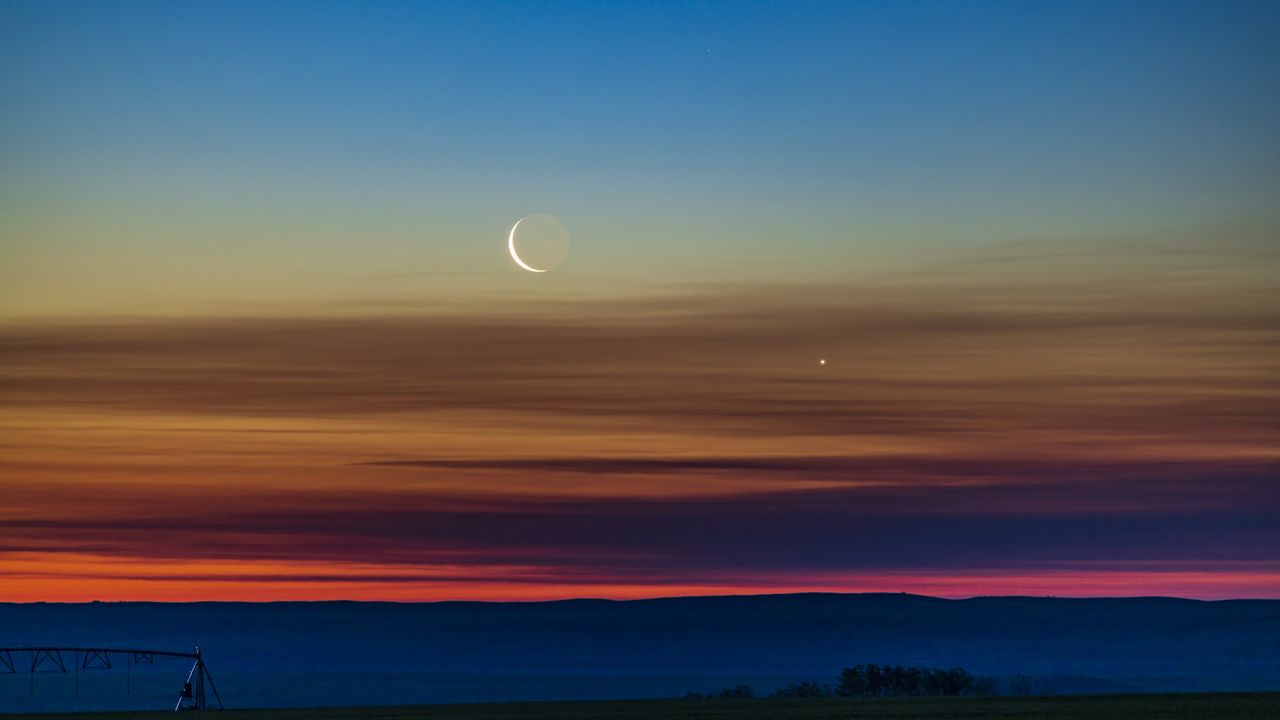
What you’ll see: Venus shines as the “evening star” – the brightest object after the sun and moon – while the moon appears as a slender, glowing crescent. Their proximity makes for an unforgettable sight, especially against the deepening colors of dusk.
Prerequisites
Timing and Location
- Date: May 18 (evening).
- Time: The best viewing window starts about 15–30 minutes after sunset in your local time zone. The pair will be low in the west and will set within 1–2 hours after sunset, so promptness is key.
- Location: Any spot with a clear, unobstructed view of the western horizon. An elevated area, such as a hilltop or open field, helps avoid buildings and trees.
- Weather: Check local forecasts. Clear skies are essential; even thin clouds can obscure the delicate crescent.
Equipment (Optional)
- Naked eye: Perfectly adequate – both objects are bright.
- Binoculars (7× to 10×): Enhance the view, revealing the moon’s cratered terminator and possibly Venus as a tiny, gibbous disk.
- Telescope: Not required but will show Venus’s phases and the moon’s surface details.
- Camera with a telephoto lens: For capturing the scene; a tripod is recommended.
Step-by-Step Guide
1. Determine Your Viewing Time
Sunset times vary by location. Use an online tool like Time and Date or a smartphone app (e.g., Stellarium, SkySafari) to find your exact sunset time. Plan to be at your observing spot at least 20 minutes after sunset, when the sky is dark enough but the objects are still above the horizon.
Pro tip: If you are in a time zone far from the event’s predicted optimal time (often around civil twilight), adjust accordingly. The conjunction is visible from most of Earth, but the two objects will appear closest around the same universal time. Check a planetarium app for your location.
2. Find a Suitable Location
Choose a location with a low, unobstructed western horizon. Avoid areas with bright artificial lights (streetlights, city glow). If possible, scout the spot during daylight to ensure you have a clear line of sight to where the sun sets. Parks, rural roads, or beachfronts work well.
Balcony or rooftop? As long as you can see the western sky clearly, they are fine.
3. Face West After Sunset
Use a compass or smartphone to determine west. The sun sets in the west, so you’ll be looking in that same direction. During twilight, the sky will be a gradient of orange and purple near the horizon; the moon and Venus will appear as two bright spots lower down.
4. Identify Venus and the Moon
Start scanning the sky about 10–20 degrees above the horizon (roughly the width of your fist at arm’s length). Venus will be unmistakable – it shines with a steady, brilliant white light, often the first “star” to appear after sunset. The crescent moon will be below Venus on May 18 (exact relative position may vary slightly by location, but generally the moon is lower and to the left or right). The moon’s crescent will be extremely thin, so it may be harder to spot first – look for a slender arc of light near Venus.
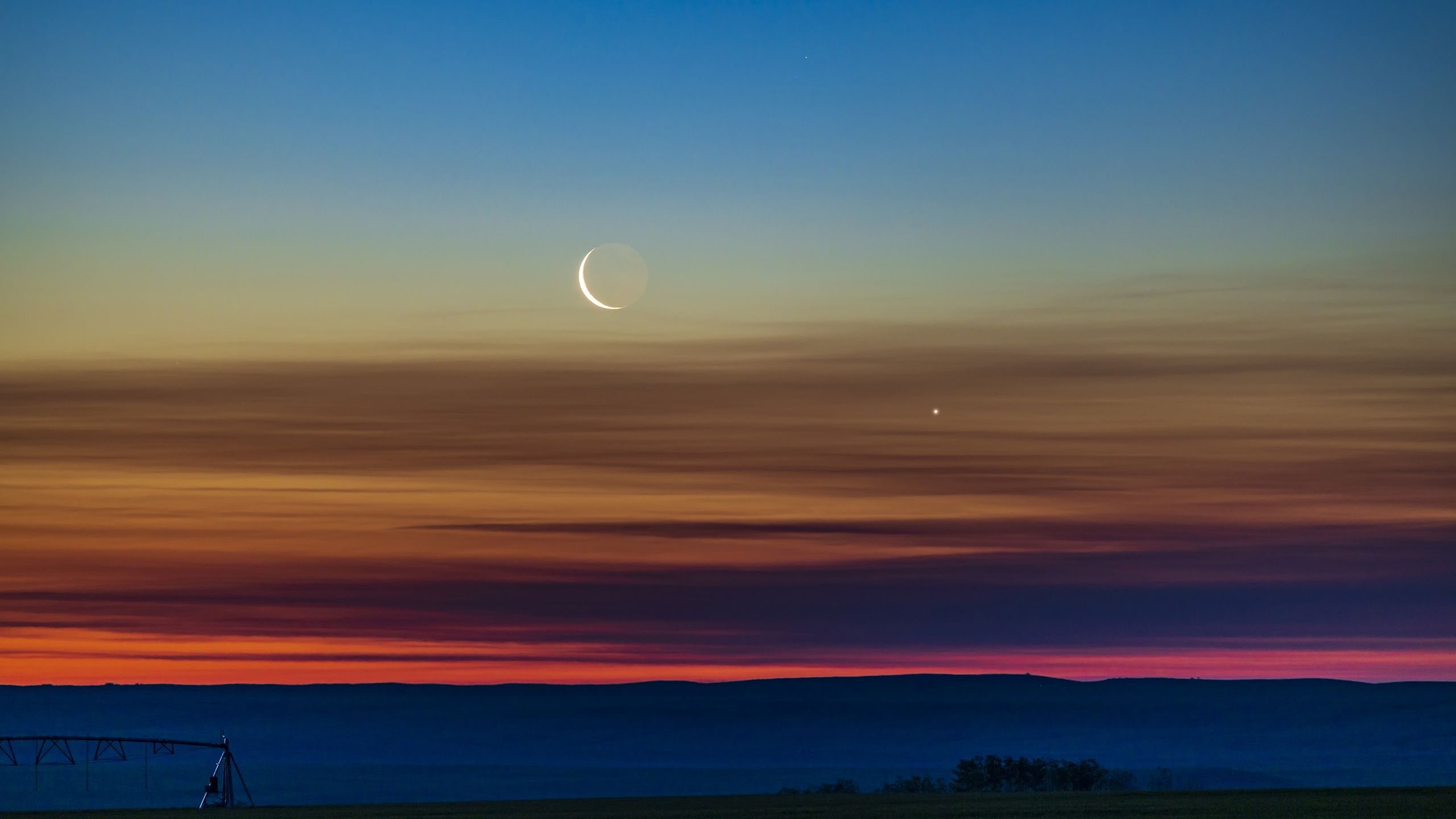
If you need assistance, use a stargazing app that shows real-time sky positions.
5. Observe and Capture (Optional)
Take a moment to enjoy the view with your naked eyes. Then, if you have binoculars, bring them up to see the moon’s rugged edge and the small disk of Venus. For photography, use a telephoto lens (200mm or longer) on a tripod. Set manual focus to infinity, start with ISO 400–800, and try exposure times around 1/2 to 2 seconds (adjust based on brightness). Experiment with different exposures to capture both the crescent detail and Venus’s glow.
Common Mistakes
- Looking too early or too late: The objects are not visible in full daylight or long after sunset when they set. Stick to the 15–30 minute after sunset window.
- Wrong direction: Many beginners look east out of habit. Remember: the sun sets in the west; Venus follows the sun, so face west.
- Ignoring light pollution: City lights can wash out the faint lunar crescent. Drive to a darker location if possible.
- Forgetting to check the moon’s phase: On May 18, the moon is a thin crescent a day or two after new moon. This is very delicate and can be missed if the sky is not dark enough.
- Relying only on a star chart without time adjustment: Always set your app or chart to your local time.
Summary
The May 18 conjunction of Venus and a slender crescent moon is a simple yet breathtaking event visible to anyone with a clear western horizon after sunset. By planning the right timing (20–30 minutes post-sunset), choosing a dark location, and using a compass to face west, you can easily spot the duo. Optional binoculars or a camera enhance the experience. Avoid common mistakes like looking north or showing up too late. Mark your calendar and enjoy this free celestial show!